Swing interpretation is something we use a lot here, and I've mostly assumed people know what it is— you probably wouldn't be reading all of this high-flying jazz drumming nonsense if you didn't. It's still a good idea to spell it all out, so people aren't working with partial information; so here are my ideas about it. I'm a player who happens to also be a teacher, and not a scholar, so other people may have different, better, or more complete ideas about it, despite the unequivocal-sounding title of the post.
Swing is a way of playing 8th notes. If you look at a fake book, a big band chart, or sheet music for standard tunes, for the most part they are written in regular old 4/4, using mostly 8th notes and longer rhythmic values:
Often explanation of how to play that with a swing feel is limited to this, or its verbal equivalent:
Swing = triplets. Got it. NEXT!
Except... no. Swing = triplets approximately the same way a “flesh”-colored Crayola = the color of human flesh:
That is, the circumstances under which flesh is flesh crayon colored are actually rather few, depending on the complexion of the individual, and the lighting in which he or she is viewed. Likewise with music, swing interpretation varies according to the player, the tempo and style of the piece, and what's going on musically at the moment.
Continued after the break:
Showing posts with label performance practices. Show all posts
Getting lost
| Or not. |
Here are a few pointers on a subject with which I am all too intimately familiar: getting lost while soloing over over a form, and while reading:
SOLOING
First, whatever various hells break loose during your solo, you can always just cue the band back in at the end. Set them up by playing something that sounds like a last A (assuming an AABA form)- going back to playing time would suggest that- and make significant eye contact with the rest of the band. If they're not deliberately hanging you out to dry, they'll come in at the end of the 8 bars, especially if you give them a nice bonehead-simple lead-in on the last measure. If they don't follow you, you can play eight more bars and then verbally count them back in. They would have to really have it in for you to ignore that.
You do also have to know the tune. Be able to sing the melody badly, know the length and structure of the form (12 bar blues, AABA, 32 bars + tag, 16+16, etc), and know the standard arrangement, if there is one (e.g., the repeated figure on Stolen Moments, or the stops in Work Song). At the very least you have to know the form.
Something you can do at the actual moment of getting lost is to just guess where the nearest reference point is; so if you get lost in the middle of the second A, then make a big downbeat and change the texture someplace that could plausibly be the beginning of the bridge, and carry on with the form from there. Who knows, you might even guess right. Even if you don't, most of the band will suspect that they counted wrong, and half of the rest of them aren't even paying attention. The actual cats will know that you blew it, and recovered. It doesn't matter.
More helpful tips after the break:
What's the longest phrase you can play without getting lost? If you can play 8 bars or a chorus of blues, you're in. After that it's just a matter of having the presence of mind to know whether you're on the first, second, or last A, or the bridge. Or whatever part of the form in question.
It's common for novices to forget which of the three A sections they're on, so beware of that. Maybe mentally screaming "TOP!" to yourself after the last A will help you keep them straight; get used to thinking bridge, last A, TOP! at the beginning of each of those sections, respectively. The first two A's should take care of themselves.
Simplify. You can probably play time unaccompanied through the form without getting lost. Build on that. Do a tactical retreat from your massively displaced/polyrhythmic hell-of-notes chops-fest, and just play time, adding things as you are able to without losing it.
READING
These mostly apply to the type of reading I've been doing these days- challenging one or two page lead sheets:
Watch out for odd phrases. Is the form 4+4+4+5 bars? When you get to that last phrase, you're going to have to remember every time that there's an awkward extra bar. So don't get too comfortable at that spot- count through it. That goes double for any random, momentary meter changes the composer/arranger decides to throw at you.
Watch and listen for variations in the harmonic rhythm. That's the rate at which the chords change. If most of the changes happen once per measure, but there are two per measure in a few spots, you should be able to hear it and orient around them.
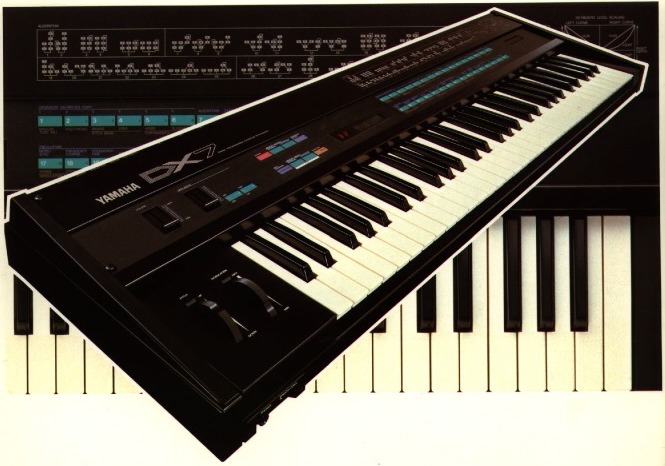
Figure out where your harmonic home base is. As you hack through the chart the first time, listen for the comfy-sounding chords, and remember where they are on the page. Get used to cuing off their sound when they recur elsewhere in the chart. With our recent "tune of the moment" Feet First, for example, there's D-7/A-7 thing that happens at the top, and throughout the piece. You should be able to hear that when it comes up later. You don't have to know a D-7 from a DX7 to do this; once you find it on the chart and start listening for it, it will be as distinctive as someone hitting a cowbell at that spot.
Another way of counting odd meters
Here's something new to me- though for all I know it's a common thing- for stupid dogmatic reasons I for years stayed pretty willfully ignorant about the finer points of playing in odd meters. Probably this method is best for faster */4 meters and moderate */8 meters.
Anyway: Ed Uribe explains one way samba in 7/4 (yes, that's a real thing) is counted:
Note that beat 4 does not get an &, which implies a 2+2+3 grouping. I suppose for 3+2+2 you could count it: "1-&-2 3-& 4-&"
It's a little strange at first, but maybe at least as good as the other options- if they weren't a little bit odd I guess they would call them "happy" meters, or something. I think once you get used to slurring the 4 into the 1 you're not going to make the mistake of playing a 4 &.
This idea could be a life-saver in five, one of the most annoying meters to count and play:
For that matter, you could try doing it in three:
Since most people don't have a problem counting 3/4, I don't know what is gained by that, except that the half note + quarter note interpretation is built into it. Maybe it's something to fool around with. Maybe I need more coffee.
Anyway: Ed Uribe explains one way samba in 7/4 (yes, that's a real thing) is counted:
Note that beat 4 does not get an &, which implies a 2+2+3 grouping. I suppose for 3+2+2 you could count it: "1-&-2 3-& 4-&"
It's a little strange at first, but maybe at least as good as the other options- if they weren't a little bit odd I guess they would call them "happy" meters, or something. I think once you get used to slurring the 4 into the 1 you're not going to make the mistake of playing a 4 &.
This idea could be a life-saver in five, one of the most annoying meters to count and play:
For that matter, you could try doing it in three:
Since most people don't have a problem counting 3/4, I don't know what is gained by that, except that the half note + quarter note interpretation is built into it. Maybe it's something to fool around with. Maybe I need more coffee.
Things to do with a beat
Writing by making lists of things- it's just where I'm at right now. This is a quick run down of one of the main jobs/avenues for creativity on the drums- the manner in which you keep time. Often students will work through their books either thinking they've mastered the materials because they can play the patterns as written, or, better, feeling like they're missing something because they can't do anything but play the written beat.
1. Play it repetitively at a comfortable volume and tempo. Like I say, just the first step.
2. Play it from a dead stop. This hangs beginners up- they'll often need to put a beat together one limb at a time, over several measures. Usually I have them play just the first note of a beat and then rest for the rest of the measure, adding notes as they can do them perfectly, until they are into the beat and can keep going on their own.
3. Play it from a count-off. Meaning you are to come in in the right place, and at exactly the right speed when someone counts off a tempo for you.
4. Punctuate phrases. Be able to keep track of the number of measures you've played without relying on hearing the tune, and place a marker (like a cymbal crash) at the beginning of a phrase.
5. Make fills. The fills themselves are a separate issue, but you need to be able to smoothly get from the groove to the fill, and back into the groove.
Keep reading, the interesting ones are all after the break:
6. Make ensemble figures. Same as with the fills.
7. Improvise variations on it. Make little changes in the bass drum or sometimes snare drum part to give the groove the feeling of developing, of acting in conversation with the other parts. As you work through your books, try to relate beats to each other; notice that many of them are variations on a few basic forms. If you've worked through my methods, you can probably make the variations on the fly.
8. Play it in a range of tempos. Anywhere it will likely be encountered in real music. Knowing the implied range of tempos for a given beat is also one of your jobs. Which leads us to:
9. Know what it's for. You should be listening to enough music to be getting an idea what calls for what type of beat. Today especially, anything you find in a book labeled "rock" or "funk" is going to be applicable across many genres.
10. Make common metric modulations. Many drummers (and some composers and arrangers) like to play mathematician, but usually being able to go into double time or half time (or double time or half time feel) will be quite sufficient.
11. Play it in a wide range of dynamics, from very, very soft to pretty strong. Very few drummers can play as softly as they will often be asked to. Some drummers find it difficult to play as loud as they want to, though most have no trouble playing as loud as they will need to. Which is still usually louder than most people will want them to.
12. Make changes of intensity using timbre and orchestration. This can mean re-voicing, embellishing, or simplifying/taking away parts. For example, changing the timbre of the snare drum back beats by switching to brushes, or to rim shots, rim clicks, or flams, or by doubling them with cymbal crashes or floor tom hits. You're also doing this when you move your ride pattern from the hi-hat to the ride cymbal, or crash cymbal, or floor tom, or cow bell, or whatever. This is a huge area for exploration, especially as you get into more complex music, and music with a wide dynamic range.
1. Play it repetitively at a comfortable volume and tempo. Like I say, just the first step.
2. Play it from a dead stop. This hangs beginners up- they'll often need to put a beat together one limb at a time, over several measures. Usually I have them play just the first note of a beat and then rest for the rest of the measure, adding notes as they can do them perfectly, until they are into the beat and can keep going on their own.
3. Play it from a count-off. Meaning you are to come in in the right place, and at exactly the right speed when someone counts off a tempo for you.
4. Punctuate phrases. Be able to keep track of the number of measures you've played without relying on hearing the tune, and place a marker (like a cymbal crash) at the beginning of a phrase.
5. Make fills. The fills themselves are a separate issue, but you need to be able to smoothly get from the groove to the fill, and back into the groove.
Keep reading, the interesting ones are all after the break:
6. Make ensemble figures. Same as with the fills.
7. Improvise variations on it. Make little changes in the bass drum or sometimes snare drum part to give the groove the feeling of developing, of acting in conversation with the other parts. As you work through your books, try to relate beats to each other; notice that many of them are variations on a few basic forms. If you've worked through my methods, you can probably make the variations on the fly.
8. Play it in a range of tempos. Anywhere it will likely be encountered in real music. Knowing the implied range of tempos for a given beat is also one of your jobs. Which leads us to:
9. Know what it's for. You should be listening to enough music to be getting an idea what calls for what type of beat. Today especially, anything you find in a book labeled "rock" or "funk" is going to be applicable across many genres.
10. Make common metric modulations. Many drummers (and some composers and arrangers) like to play mathematician, but usually being able to go into double time or half time (or double time or half time feel) will be quite sufficient.
11. Play it in a wide range of dynamics, from very, very soft to pretty strong. Very few drummers can play as softly as they will often be asked to. Some drummers find it difficult to play as loud as they want to, though most have no trouble playing as loud as they will need to. Which is still usually louder than most people will want them to.
12. Make changes of intensity using timbre and orchestration. This can mean re-voicing, embellishing, or simplifying/taking away parts. For example, changing the timbre of the snare drum back beats by switching to brushes, or to rim shots, rim clicks, or flams, or by doubling them with cymbal crashes or floor tom hits. You're also doing this when you move your ride pattern from the hi-hat to the ride cymbal, or crash cymbal, or floor tom, or cow bell, or whatever. This is a huge area for exploration, especially as you get into more complex music, and music with a wide dynamic range.
Playing quieter
| Miles is going to have to ask you to CTFO. |
No more. I now declare myself to be an expert on playing softly, ever since I was able to play a date sitting two feet away from a violinist and a bassoonist, play everything I wanted (this was an actual blowing gig), and have them leave at the end of the night not only on speaking terms with me, but actually happy. QED.
So, I thought I'd share a few things that helped me when I decided I needed to get this part of my playing together once and for all:
Lower your stick heights. Do your pad practice keeping everything in the 1-6" range, dedicating a significant amount of time to practicing in the <1"-3" range. Using a mirror helps. Learning to play without lifting the stick before every note will help keep your volume from creeping up. Spend some time cleaning up your full strokes, down strokes, taps, and up strokes, so every note you play ends with your stick in place for the next note. You can't be thinking this way at the drum set, but if you work on it on the pad it will get things moving in the right direction.
Simplify. If you're accustomed to playing a lot of ghost notes, busy ride patterns and other filler, lose most of that. At low volumes your dynamics become compressed, so your ghost notes will not be much softer than your primaries; the effect is similar to playing mf+ ghost notes along with a f funk groove; it's nobody's idea of funky.
You don't have to switch to brushes. Or multi-rods, or whatever, unless there's a musical reason for it- unless that's the sound you want. I still start gigs on the brushes, and psych myself up for a big jump in dynamics when I switch to sticks, only to find that, oh hey, I can play them exactly the same volume as the brushes. You don't have to do rim clicks instead of regular snare hits, for the same reason.
Use your wrists. Eliminate forearm movement, and hold the stick so that it doesn't wobble around in your hand. That means you need to hold on in back maybe more than you're comfortable with- my back fingers keep the stick against my hand most of the time. This eliminates much of the "noise" (movement and effort that isn't contributing to putting the stick where you want it) in your stroke, improving your control and helping you work less and relax overall. Even though your grip is more controlled, you have to keep it relaxed, with a feeling of lightness, and a smooth action in your stroke from the attack, to the note, to the follow-through. I concentrate on this more on the practice pad; enough of it carries over to my actual playing on the drums to give me the control I need without having to think about it.
It's still got to be solid. Play the notes, even if you're only playing an inch off the drum.
Get comfortable with heel-down technique on both the bass drum and hi-hat. It's not that you can't play them softly heel up, but keeping your feet on the floor helps your balance, which gets magnified as an issue when playing softly. Playing heel up also generates more background noise, which will compete with your soft playing.
Get some books with written-out drum fills/solo ideas. I've found that by taking away the creative element, it's easier to focus on keeping the volume down. Once you get accustomed to making the moves quietly in that structured setting, you should be able to keep it together better in actual playing. I recommend: Rudimental Patterns by Joe Cusatis, Rudimental Jazz
Expand your idea of what is a good drum sound if you're accustomed to a lot of rim shots on the snare, full crash sounds, and deep, funky toms.
Expand your idea of what is a good drum performance. If you need to be making a lot of big build-ups and explosive climaxes all over the place to feel like you're doing anything, stop it. Learn the phrase slow burn, and apply it.
Play to the softest instrument in the ensemble. Listen carefully and concentrate on not drowning them out.
Don't fight your instrument. Use drums/cymbals/heads/tuning/sticks that are controllable, and that sound good at a low volume.
- Wise use of muffling. In the past I was an anti-muffling extremist- I used wide-open Remo Ambassadors on all my drums including the bass drum. Playing that way at very low volumes, your signal:noise ratio can go a little bit to hell- your primary note can get lost in the overtones. Today I have an Evans "Dry" head on one of my snare drums, and a coated Emporer with a Muff'l on the playing side of my bass drum. That's still a pretty live sound for a lot of people.
- Tuning. I tune my drums high enough that I can just touch them and they will produce a tone. Lower tunings need to be played more forcefully to get a good sound.
- Bosphorus cymbals, particularly the Master series, and certain Sabian cymbals are very good for allowing you to dig in and get a full sound without the volume getting away from you.
- Maple sticks with a wooden bead. They don't need to be small- I use a Vic Firth SD-11, which is the size of a fairly beefy 5B, and I have no problem controlling them. They're easier to hold on to, and get a better tone than smaller sticks, both of which help me to relax. Use a felt beater on the bass drum.
Subscribe to:
Posts (Atom)